







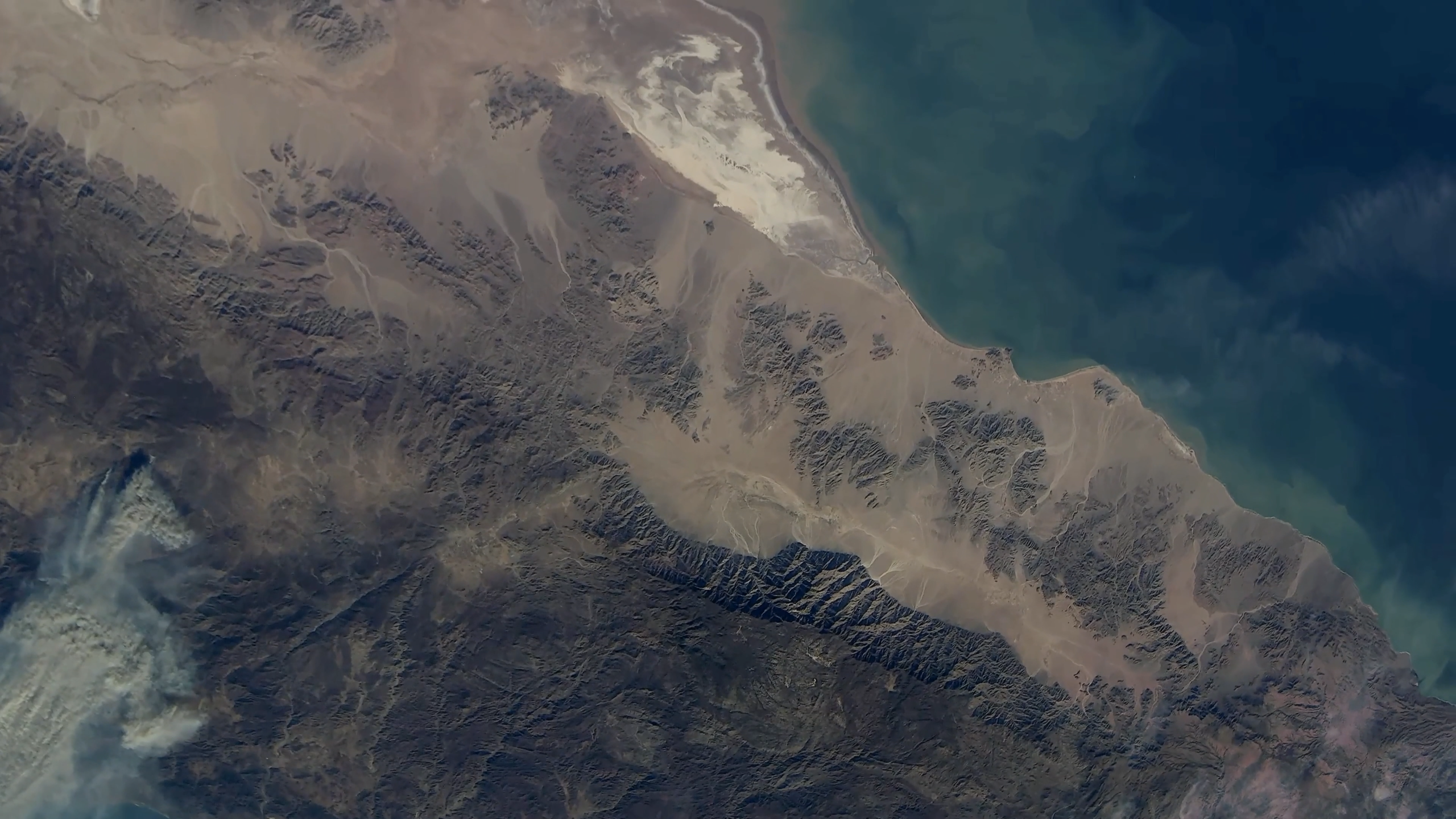
Sen, the space video streaming company, announces the launch of its new Ultra High Definition 4K livestream of Earth and space.
Sen’s vision is to ensure everyone can experience amazing views of Earth and space like those experienced by astronauts.
Sen’s new 4K livestream is available for over 20 hours per day, with just a few hours a day of expected downtime due to routine loss of signal communications with the inter-satellite link relaying the video data to the ground.
Sen’s livestream provides the public with the world’s first live Ultra High Definition views of Earth and is the world’ first commercial livestream from space, giving additional live views to those provided by NASA’s High Definition video cameras already on the space station.
The livestream is now freely available on Sen.com, iOS, Android and YouTube.com/sen.
Sen hopes its 4K livestream of Earth will be accessed overtime by billions of people, empowering everyone with live views of our planet to inform, educate, inspire and benefit humanity.
Sen will also use its video cameras to provide real-time environmental monitoring, empowering people and their communities to witness planetary change.
Charles Black, Founder and CEO of Sen, said “I want to thank the amazing team at Sen and all our investors who have helped make this possible. We’re excited to share these amazing 4K live views of Earth. This mission really is for all humanity and we hope our livestream will be a valuable application that empowers everyone with real-time information, and that it will inspire people.”
The live video is captured by Sen’s own 4K camera system called “SpaceTV-1” hosted on the International Space Station pursuant to a contract with Airbus U.S. Space & Defense Inc. (“Airbus”). Sen’s payload is hosted on the ArgUS plate attached to the Bartolomeo platform, operated by Airbus and located on the European Space Agency’s Columbus module.
Sen’s payload has three camera views. One camera, with a wide angle ‘panoramic’ lens, provides views of Earth’s horizon. Another camera looks straight down at Earth and films a scene around 240 km x 180 km, with each pixel representing approximately 60m of the ground (“ground sample distance” or GSD). Another camera looks at the forward-facing docking port of the space station’s Harmony Module.
Sen already has its own satellite, ETV-A1, in orbit and is working on launching further video cameras into space to increase livestreaming output in 2026 and beyond.
About Sen: https://about-sen.flstack.com
Sen was founded in 2014 by Charles Black with a vision to democratize space using video to inform, educate, inspire and benefit all humanity. Sen’s mission is to stream real-time videos from space to billions of people, gathering news and information on Earth and space and making the data universally accessible and useful. Sen captures its unique video content using its own satellites and hosted cameras. Sen is a freemium business model, offering free to view and premium subscription options for no ads, downloads and usage. Sen has one satellite in orbit, ETV-A1 and will launch further satellites and hosted cameras in the coming years as it builds out a network of video cameras in space.
Media enquiries:
Sen:
Charles Black, charles.black@sen.com
– Ends – –